
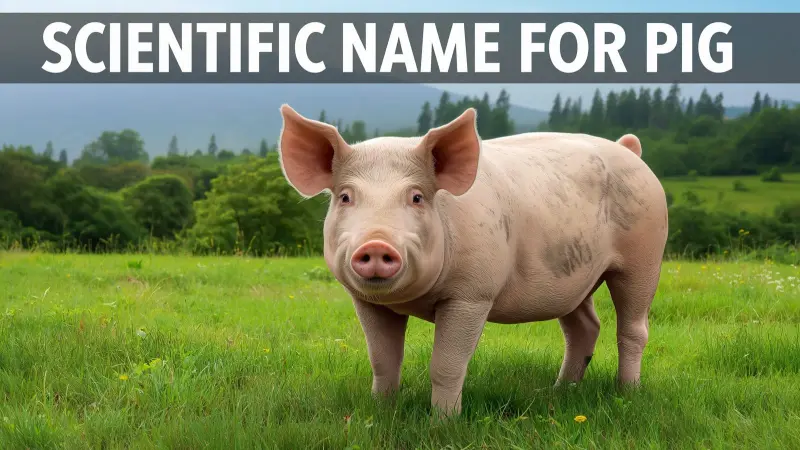
The pig is one of the most important domesticated animals in the world, valued for agriculture, food production, and research. Learning the scientific name for pig helps us understand its place in the animal kingdom and its relationship to other species.
Scientific names provide a universal way to identify animals, avoiding confusion caused by different local names. The domestic pig belongs to a fascinating group of mammals known for intelligence, adaptability, and social behavior.
In this article, you’ll explore the scientific name for pig, its classification, physical characteristics, habitat, behavior, and interesting facts that make this animal unique.
Pig Taxonomy and Classification
Kingdom: Animalia
Meaning: Pigs belong to the animal kingdom.
Phylum: Chordata
Meaning: Animals with a spinal cord.
Class: Mammalia
Meaning: Warm-blooded animals that produce milk for their young.
Order: Artiodactyla
Meaning: Even-toed hoofed mammals.
Family: Suidae
Meaning: The pig family.
Genus: Sus
Meaning: The genus that includes pigs and wild boars.
Species: Sus scrofa
Meaning: The wild boar species from which domestic pigs evolved.
Subspecies: Sus scrofa domesticus
Meaning: The domesticated pig raised by humans.
Scientific Names Related to Pigs
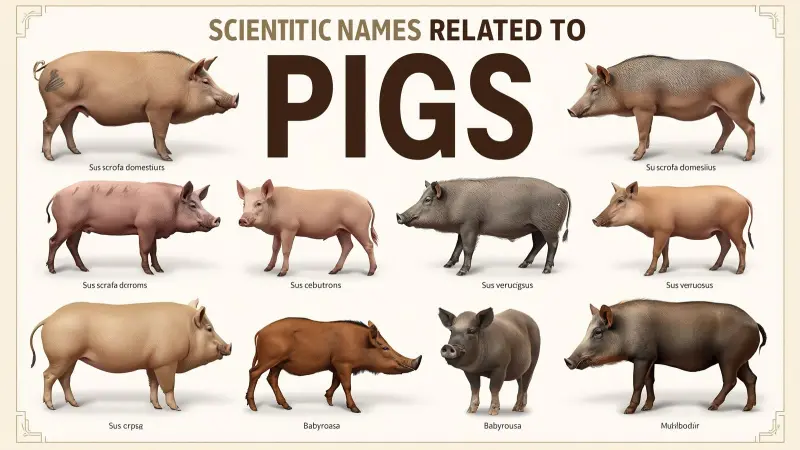
Sus scrofa
Meaning: The scientific name of the wild boar.
Sus scrofa domesticus
Meaning: The domestic pig.
Sus barbatus
Meaning: The bearded pig found in Southeast Asia.
Sus cebifrons
Meaning: The Visayan warty pig native to the Philippines.
Sus verrucosus
Meaning: The Javan warty pig.
Sus salvanius
Meaning: The pygmy hog, one of the smallest wild pig species.
Sus philippensis
Meaning: The Philippine warty pig.
Sus ahoenobarbus
Meaning: The Palawan bearded pig.
Sus bucculentus
Meaning: The Indochinese warty pig.
Sus oliveri
Meaning: The Mindoro warty pig.
Characteristics of Domestic Pigs
Highly Intelligent
Meaning: Pigs are considered among the smartest farm animals.
Strong Sense of Smell
Meaning: They can locate food buried underground.
Social Animals
Meaning: Pigs enjoy living in groups.
Omnivorous Diet
Meaning: They eat both plants and animal-based foods.
Excellent Memory
Meaning: They can remember locations and tasks.
Adaptable Nature
Meaning: They can survive in various climates.
Good Communication Skills
Meaning: Pigs use many different sounds to communicate.
Fast Growth Rate
Meaning: Domestic pigs grow quickly compared to many livestock animals.
Curious Behavior
Meaning: They love exploring their surroundings.
Efficient Feed Conversion
Meaning: They convert food into body weight efficiently.
Popular Pig Breeds Around the World
Yorkshire Pig
Meaning: One of the most common commercial pig breeds.
Duroc Pig
Meaning: Known for rapid growth and quality meat.
Hampshire Pig
Meaning: Recognized by its white belt across the body.
Berkshire Pig
Meaning: Famous for premium-quality pork.
Landrace Pig
Meaning: Known for long bodies and large litters.
Chester White Pig
Meaning: A popular American breed.
Poland China Pig
Meaning: One of the oldest pig breeds in the United States.
Large Black Pig
Meaning: A heritage breed known for hardiness.
Tamworth Pig
Meaning: Often called the “bacon breed.”
Gloucestershire Old Spots Pig
Meaning: Known for distinctive black spots.
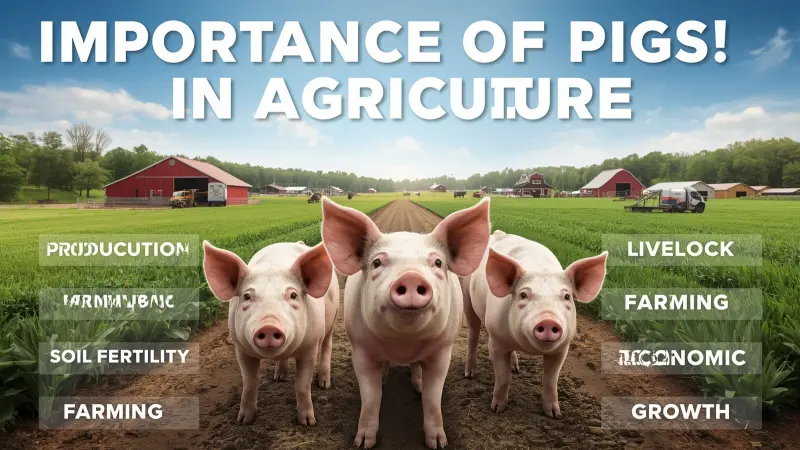
Importance of Pigs in Agriculture
Meat Production
Meaning: Pigs provide pork, bacon, and ham.
Economic Value
Meaning: Pig farming contributes significantly to agriculture.
Breeding Programs
Meaning: Pigs are selectively bred for improved traits.
Food Security
Meaning: They help meet global protein demands.
Organic Farming
Meaning: Some pigs are raised in sustainable farming systems.
Rural Employment
Meaning: Pig farming creates jobs in rural communities.
Waste Recycling
Meaning: Pigs can consume certain agricultural by-products.
Livestock Diversity
Meaning: They contribute to agricultural biodiversity.
Research Applications
Meaning: Pigs are used in medical and biological research.
Global Trade
Meaning: Pork products are traded worldwide.
Interesting Facts About Pigs
Pigs Can Dream
Meaning: Like humans, pigs experience REM sleep.
Pigs Are Excellent Swimmers
Meaning: Many pig breeds enjoy swimming.
Pigs Recognize Faces
Meaning: They can identify other pigs and humans.
Pigs Can Learn Tricks
Meaning: They can be trained similarly to dogs.
Pigs Have Great Memories
Meaning: They remember locations and routines.
Pigs Love Playing
Meaning: Young pigs often engage in playful behavior.
Pigs Communicate Frequently
Meaning: They use dozens of unique vocal sounds.
Pigs Are Clean Animals
Meaning: Contrary to myths, pigs prefer clean environments.
Pigs Are Highly Curious
Meaning: They enjoy investigating new objects.
Pigs Have Strong Emotional Intelligence
Meaning: They can show empathy and social awareness.
FAQs
- What is the scientific name of a pig?
Meaning: The scientific name of a domestic pig is Sus scrofa domesticus. - What is the scientific name of a wild pig?
Meaning: The scientific name of a wild boar is Sus scrofa. - Which family do pigs belong to?
Meaning: Pigs belong to the Suidae family. - Are pigs mammals?
Meaning: Yes, pigs are mammals because they are warm-blooded and feed milk to their young. - What do pigs eat?
Meaning: Pigs are omnivores and eat both plant and animal matter. - How intelligent are pigs?
Meaning: Pigs are considered among the most intelligent farm animals. - Where did domestic pigs originate?
Meaning: Domestic pigs evolved from wild boars thousands of years ago. - Can pigs be kept as pets?
Meaning: Yes, some breeds are commonly kept as companion animals. - What is the lifespan of a pig?
Meaning: Domestic pigs can live between 12 and 20 years with proper care. - Why are pigs important to humans?
Meaning: They provide food, economic benefits, and valuable contributions to scientific research.
Conclusion
The scientific name for the domestic pig is Sus scrofa domesticus, a subspecies of the wild boar known as Sus scrofa. Pigs are intelligent, adaptable, and economically important animals found throughout the world.
Beyond their role in agriculture, they are fascinating creatures with strong memories, social behaviors, and impressive problem-solving abilities.
Learning the scientific name and classification of pigs helps us better understand their place in the animal kingdom and their relationship with humans.
If you’re studying biology, working on a school assignment, or simply curious about animals, knowing about pigs and their scientific classification provides valuable knowledge about one of the world’s most important domesticated species

i’m David Villey, crafting catchy names, meaning, puns & trending ideas namezyo.com, helping you discover words that stick and go viral.