

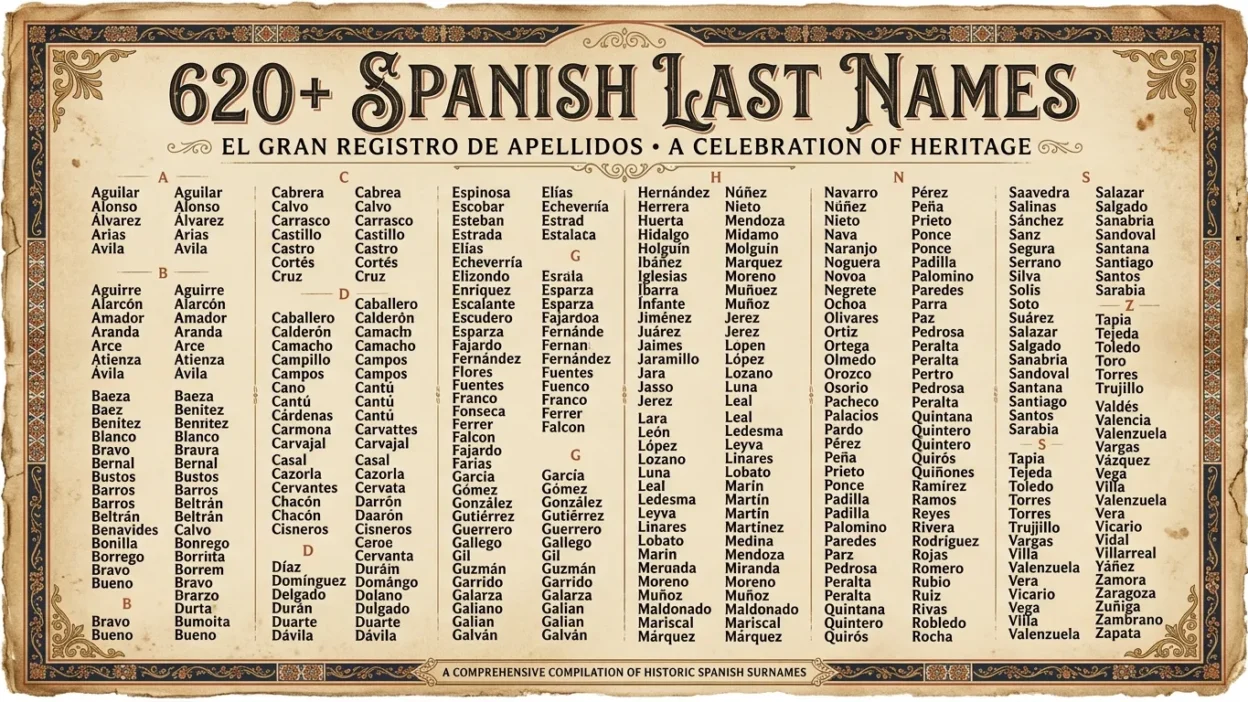
Quick Answer
Spanish last names come from family lines, places, jobs, and personal traits. Popular choices include García, Rodríguez, Martínez, López, and Hernández. This list covers 620 Spanish surnames with simple meanings, origins, and pronunciation tips to help you explore your family history or choose a name for a character.
Spanish surnames tell stories about families, places, and the past. Some came from a father’s first name. Others came from a town, a job, or a feature of the land.
Many Spanish last names are also common in Mexico, Puerto Rico, Cuba, and other parts of Latin America. You will also find them across the United States.
One key detail can help you choose the right surname: a name’s meaning does not always tell you its family’s history. For example, a surname may have started as a word for a job centuries ago. Today, people with that name may have no link to that job.
This guide includes common Spanish surnames, older family names, and less common options. Each entry gives a short meaning, a likely origin, and an easy way to say the name.
In This Article
- Most Popular Spanish Last Names in 2026
- Classic Spanish Family Names
- Spanish Last Names From Places and Nature
- Distinctive Spanish Last Names
- How to Choose the Perfect Spanish Last Name
- FAQs
- Conclusion
Most Popular Spanish Last Names in 2026
The best current benchmark for surnames in Spain comes from the National Statistics Institute (INE). Its 2025 data places García first, followed by Rodríguez and González. These are established family names, not a ranking of surnames newly trending in 2026.
1. García
- Meaning: Uncertain; its older roots are often linked to Basque.
- Origin: Medieval Iberia, especially areas of Spain.
- Pronunciation: gar-SEE-ah.
- 2026 note: A strong choice for a widely recognized Spanish surname.
2. Rodríguez
- Meaning: Son of Rodrigo.
- Origin: Spanish patronymic surname.
- Pronunciation: roh-DREE-gehz.
- 2026 note: The ending -ez often marks a family link in Spanish surnames.
3. González
- Meaning: Son of Gonzalo.
- Origin: Spanish, with roots in medieval Iberian naming.
- Pronunciation: gon-SAH-lehz.
- 2026 note: Common in Spain and across Latin America.
4. Fernández
- Meaning: Son of Fernando.
- Origin: Spanish patronymic surname.
- Pronunciation: fehr-NAHN-dehz.
- 2026 note: Its long history makes it suitable for family-history research.
5. López
- Meaning: Son of Lope; Lope is linked to the Latin word for wolf.
- Origin: Spanish.
- Pronunciation: LOH-pehz.
- 2026 note: A familiar surname in Spanish-speaking communities in the United States.
6. Martínez
- Meaning: Son of Martín.
- Origin: Spanish patronymic surname.
- Pronunciation: mar-TEE-nehz.
- 2026 note: The name Martín has long-standing roots in European naming traditions.
7. Sánchez
- Meaning: Son of Sancho.
- Origin: Spanish.
- Pronunciation: SAHN-chehz.
- 2026 note: Its clear spelling makes it easy to recognize in Spanish-language records.
8. Pérez
- Meaning: Son of Pedro.
- Origin: Spanish patronymic surname.
- Pronunciation: PEH-rehz.
- 2026 note: Pedro is the Spanish form of Peter.
9. Gómez
- Meaning: A patronymic name linked to the personal name Gome or Gomes.
- Origin: Medieval Iberia.
- Pronunciation: GOH-mehs.
- 2026 note: A short, traditional option for a Spanish character or family tree.
10. Hernández
- Meaning: Son of Hernando or Fernando, depending on the historical form.
- Origin: Spanish.
- Pronunciation: ehr-NAHN-dehs.
- 2026 note: It is also common in Hispanic communities throughout the Americas.
Classic Spanish Family Names
These surnames have long histories in Spain and other Spanish-speaking regions. Many come from personal names passed down through families.
11. Martín
- Meaning: From the personal name Martín, linked to the Roman name Martinus.
- Origin: Spanish.
- Pronunciation: mar-TEEN.
- 2026 note: A simple, classic surname with a familiar sound.
12. Jiménez
- Meaning: Traditionally understood as a family name formed from Jimeno.
- Origin: Medieval Spain.
- Pronunciation: hee-MEH-nehz.
- 2026 note: Its accent mark is part of standard Spanish spelling.
13. Ruiz
- Meaning: Traditionally linked to the personal name Rui or Ruy.
- Origin: Spanish.
- Pronunciation: roo-EES.
- 2026 note: Its short form works well for compact character names.
14. Díaz
- Meaning: Traditionally linked to Diego or a related medieval personal name.
- Origin: Spanish.
- Pronunciation: DEE-ahs.
- 2026 note: A short surname with a long record in Spanish history.
15. Moreno
- Meaning: Often associated with dark hair, dark coloring, or a dark complexion.
- Origin: Spanish descriptive surname.
- Pronunciation: moh-REH-noh.
- 2026 note: The original label does not describe every modern bearer.
16. Muñoz
- Meaning: A patronymic surname linked to the personal name Muño.
- Origin: Spain.
- Pronunciation: moo-NYOHSS.
- 2026 note: The letter ñ has a distinct sound, like the ny in “canyon.”
17. Álvarez
- Meaning: Son of Álvaro.
- Origin: Spanish.
- Pronunciation: AHL-vah-rehz.
- 2026 note: Its ending follows a common pattern in Iberian family names.
18. Romero
- Meaning: Often referred to a pilgrim traveling to Rome.
- Origin: Spanish.
- Pronunciation: roh-MEH-roh.
- 2026 note: It may also have regional or family-specific origins.
19. Gutiérrez
- Meaning: Son of Gutierre.
- Origin: Spanish.
- Pronunciation: goo-TYEH-rehz.
- 2026 note: The name Gutierre is an older personal name.
20. Alonso
- Meaning: From the personal name Alonso, related to Alfonso.
- Origin: Spanish.
- Pronunciation: ah-LOHN-soh.
- 2026 note: It can be found in both surname and given-name use.
21. Ramírez
- Meaning: Son of Ramiro.
- Origin: Spanish.
- Pronunciation: rah-MEE-rehz.
- 2026 note: A traditional surname found across the Spanish-speaking world.
22. Torres
- Meaning: Towers.
- Origin: Spanish and Portuguese.
- Pronunciation: TOH-rehs.
- 2026 note: It may have begun as a place-based or landscape surname.
23. Flores
- Meaning: Flowers; the exact family-name origin can vary.
- Origin: Spanish.
- Pronunciation: FLOH-rehs.
- 2026 note: Its floral association gives it a memorable sound.
24. Rivera
- Meaning: Often linked to a riverbank or riverside.
- Origin: Spanish.
- Pronunciation: ree-VEH-rah.
- 2026 note: A useful option for a character with a Spanish-language background.
25. Gómez de la Torre
- Meaning: Gómez is a family name; de la Torre means “of the tower.”
- Origin: Spanish compound surname.
- Pronunciation: GOH-mehs deh lah TOH-reh.
- 2026 note: Compound surnames may preserve more than one family line.
26. Vargas
- Meaning: Uncertain; its historical place-name roots are debated.
- Origin: Spanish.
- Pronunciation: VAHR-gahs.
- 2026 note: Check regional records before assigning a precise family origin.
27. Castillo
- Meaning: Castle.
- Origin: Spanish.
- Pronunciation: kahs-TEE-yoh.
- 2026 note: It may refer to a family linked to a castle or nearby place.
28. Cruz
- Meaning: Cross.
- Origin: Spanish and Portuguese.
- Pronunciation: kroos.
- 2026 note: It can have religious, place-based, or other family associations.
29. Reyes
- Meaning: Kings; it may also relate to the Christian feast of Epiphany.
- Origin: Spanish.
- Pronunciation: RAY-ehs.
- 2026 note: The intended meaning depends on the surname’s history.
30. Ortiz
- Meaning: Traditionally linked to a medieval personal name, often Ortún.
- Origin: Spanish.
- Pronunciation: or-TEES.
- 2026 note: Its exact early root is not certain.
31. Medina
- Meaning: From Arabic madīna, meaning “city.”
- Origin: Spanish surname with an Arabic-language root.
- Pronunciation: meh-DEE-nah.
- 2026 note: It may point to a place named Medina.
32. Castro
- Meaning: Fort or fortified settlement.
- Origin: Spanish and Portuguese, from Latin castrum.
- Pronunciation: KAHS-troh.
- 2026 note: It is also found in Galicia and other parts of Iberia.
33. Vega
- Meaning: Meadow or fertile lowland.
- Origin: Spanish place-based surname.
- Pronunciation: VAY-gah.
- 2026 note: A brief surname with a clear landscape link.
34. Cabrera
- Meaning: A place associated with goats.
- Origin: Spanish and Catalan place-name traditions.
- Pronunciation: kah-BREH-rah.
- 2026 note: It may refer to a place rather than an ancestor’s job.
35. Fuentes
- Meaning: Springs or fountains.
- Origin: Spanish.
- Pronunciation: FWEN-tehs.
- 2026 note: This surname may point to a place with natural springs.
36. Carrasco
- Meaning: A type of evergreen oak or scrub oak.
- Origin: Iberian, especially Spanish.
- Pronunciation: kah-RRAHS-koh.
- 2026 note: Its link to local plants makes it a landscape-based surname.
37. Iglesias
- Meaning: Churches.
- Origin: Spanish.
- Pronunciation: ee-GLEH-syahs.
- 2026 note: It may have described a person who lived near a church.
38. Delgado
- Meaning: Slim or slender.
- Origin: Spanish descriptive surname.
- Pronunciation: dehl-GAH-doh.
- 2026 note: Historical descriptions do not necessarily reflect a descendant’s traits.
39. Rojas
- Meaning: Red; it may refer to color or a place.
- Origin: Spanish.
- Pronunciation: ROH-hahs.
- 2026 note: The original reason for the name can differ by family.
40. Márquez
- Meaning: Son of Marcos or a related personal-name form.
- Origin: Spanish.
- Pronunciation: MAR-kehs.
- 2026 note: Do not confuse the surname with the noble title marqués.
41. Peña
- Meaning: Rock or rocky hill.
- Origin: Spanish.
- Pronunciation: PEH-nyah.
- 2026 note: The ñ changes the sound; it is not pronounced like a plain n.
42. León
- Meaning: Lion; also the name of a historic Spanish region and city.
- Origin: Spanish.
- Pronunciation: leh-OHN.
- 2026 note: It can carry either an animal association or a place link.
43. Marín
- Meaning: Often linked to Latin marinus, meaning “of the sea.”
- Origin: Spanish.
- Pronunciation: mah-REEN.
- 2026 note: Its sea-related root makes it easy to remember.
44. Prieto
- Meaning: Dark or black, often used as a descriptive term.
- Origin: Spanish.
- Pronunciation: pree-EH-toh.
- 2026 note: Older meanings may not match modern uses of the word.
45. Núñez
- Meaning: Son of Nuño.
- Origin: Spanish.
- Pronunciation: NOON-yehz.
- 2026 note: The surname appears in records from Spain and Latin America.
46. Méndez
- Meaning: Son of Mendo or Menendo.
- Origin: Spanish and Portuguese naming traditions.
- Pronunciation: MEHN-dehs.
- 2026 note: Spellings can vary across family records.
47. Serrano
- Meaning: Person from the mountains or highlands.
- Origin: Spanish geographical surname.
- Pronunciation: seh-RRAH-noh.
- 2026 note: It is a natural fit for a mountain-linked family history.
48. Soler
- Meaning: Often linked to a place or an old word for a house or homestead.
- Origin: Catalan and related Iberian naming traditions.
- Pronunciation: soh-LEHR.
- 2026 note: Regional records can help confirm the family’s exact origin.
49. Vidal
- Meaning: From a personal name related to Latin vitalis, “life-giving” or “vital.”
- Origin: Catalan, Occitan, and Spanish surname traditions.
- Pronunciation: vee-DAHL.
- 2026 note: It has roots beyond Castilian Spanish alone.
50. Domínguez
- Meaning: Son of Domingo.
- Origin: Spanish.
- Pronunciation: doh-MEEN-gehz.
- 2026 note: Domingo comes from Latin Dominicus, associated with the Lord.
Spanish Last Names From Places and Nature
Many surnames began with a link to the land. They may refer to a hill, a forest, a field, or a town. These names can be helpful when you study family roots.
51. Molina
- Meaning: Mill.
- Origin: Spanish.
- Pronunciation: moh-LEE-nah.
- 2026 note: It may point to a family that lived near a mill.
52. Robles
- Meaning: Oak trees.
- Origin: Spanish.
- Pronunciation: ROH-blehs.
- 2026 note: A good example of a surname linked to local trees.
53. Campos
- Meaning: Fields.
- Origin: Spanish and Portuguese.
- Pronunciation: KAHM-pohs.
- 2026 note: It may have described a family from open farmland.
54. Montoya
- Meaning: A place-based surname; its exact older meaning is uncertain.
- Origin: Iberian, especially associated with Spain.
- Pronunciation: mon-TOH-yah.
- 2026 note: Use local records to trace its specific family history.
55. Paredes
- Meaning: Walls.
- Origin: Spanish and Portuguese.
- Pronunciation: pah-REH-dehs.
- 2026 note: The name may have referred to a walled place or settlement.
56. Salazar
- Meaning: A place-name surname linked to the historic Salazar area.
- Origin: Basque and Spanish naming traditions.
- Pronunciation: sah-lah-SAHR.
- 2026 note: Its history is tied to place names rather than a simple word meaning.
57. Ochoa
- Meaning: A Basque surname traditionally linked to otso, meaning “wolf.”
- Origin: Basque Country.
- Pronunciation: oh-CHOH-ah.
- 2026 note: Its roots show the range of languages found in Spain.
58. Ayala
- Meaning: From Ayala, a place in Álava in the Basque Country.
- Origin: Basque.
- Pronunciation: ah-YAH-lah.
- 2026 note: It is a useful surname to explore in regional records.
59. Esparza
- Meaning: A place-name surname with Basque roots.
- Origin: Basque and Spanish.
- Pronunciation: ehs-PAHR-sah.
- 2026 note: Several places share this name, so family records matter.
60. Ibarra
- Meaning: Valley or riverside meadow in Basque place-name traditions.
- Origin: Basque.
- Pronunciation: ee-BAH-rrah.
- 2026 note: It is especially relevant to research on Basque ancestry.
61. Zúñiga
- Meaning: A surname derived from a historic place name.
- Origin: Navarre and the Basque region of Spain.
- Pronunciation: THOO-nyee-gah in much of Spain; SOO-nyee-gah in Latin America.
- 2026 note: Pronunciation changes with region.
62. Lugo
- Meaning: A place name, notably Lugo in Galicia.
- Origin: Galician and Spanish.
- Pronunciation: LOO-goh.
- 2026 note: A short choice with a clear link to a Spanish city.
63. Toledo
- Meaning: From Toledo, a historic city in central Spain.
- Origin: Spanish place-name surname.
- Pronunciation: toh-LEH-doh.
- 2026 note: It can be a useful clue in old family records.
64. Córdoba
- Meaning: From Córdoba, a city in Andalusia.
- Origin: Spanish place-name surname.
- Pronunciation: KOR-doh-bah.
- 2026 note: The city’s layered history includes Roman and Islamic periods.
65. Valencia
- Meaning: From Valencia, a city and region in eastern Spain.
- Origin: Spanish place-name surname.
- Pronunciation: vah-LEHN-syah.
- 2026 note: The name also appears as a place name in the Americas.
66. Zamora
- Meaning: From Zamora, a city in northwestern Spain.
- Origin: Spanish place-name surname.
- Pronunciation: sah-MOH-rah.
- 2026 note: The exact older meaning of the city name is debated.
67. Segura
- Meaning: Often linked to the Spanish word for “safe” or “secure.”
- Origin: Spanish.
- Pronunciation: seh-GOO-rah.
- 2026 note: It is also the name of several places and rivers.
68. Ríos
- Meaning: Rivers.
- Origin: Spanish.
- Pronunciation: REE-ohs.
- 2026 note: It may point to a family’s home near a river.
69. Montes
- Meaning: Mountains or hills.
- Origin: Spanish and Portuguese.
- Pronunciation: MOHN-tehs.
- 2026 note: Its landscape link is easy to understand.
70. Valle
- Meaning: Valley.
- Origin: Spanish.
- Pronunciation: VAH-yeh.
- 2026 note: It may have started as a name for someone from a valley.
71. Sierra
- Meaning: Mountain range.
- Origin: Spanish.
- Pronunciation: see-EH-rrah.
- 2026 note: The word remains common in Spanish place names.
72. Lago
- Meaning: Lake.
- Origin: Spanish and Galician surname traditions.
- Pronunciation: LAH-goh.
- 2026 note: It may have referred to a family living near a lake.
73. Costa
- Meaning: Coast or slope, depending on its historical use.
- Origin: Spanish, Portuguese, and other Romance-language traditions.
- Pronunciation: KOH-stah.
- 2026 note: The same surname can have different regional roots.
74. Prado
- Meaning: Meadow.
- Origin: Spanish and Portuguese.
- Pronunciation: PRAH-doh.
- 2026 note: It may come from a place near grassy land.
75. Estrella
- Meaning: Star.
- Origin: Spanish.
- Pronunciation: ehs-TREH-yah.
- 2026 note: It can also be connected to places or religious names.
76. Palacios
- Meaning: Palaces.
- Origin: Spanish.
- Pronunciation: pah-LAH-syohs.
- 2026 note: It may refer to a place near a large house or palace.
77. Rosales
- Meaning: Rose bushes or rose gardens.
- Origin: Spanish.
- Pronunciation: roh-SAH-lehs.
- 2026 note: The name has a clear link to plants.
78. Olivares
- Meaning: Olive groves.
- Origin: Spanish.
- Pronunciation: oh-lee-VAH-rehs.
- 2026 note: It may reflect a place known for olive trees.
79. Castañeda
- Meaning: Chestnut grove.
- Origin: Spanish.
- Pronunciation: kahs-tah-NYEH-dah.
- 2026 note: Its roots point to a wooded place.
80. del Río
- Meaning: Of the river.
- Origin: Spanish locational surname.
- Pronunciation: del REE-oh.
- 2026 note: The particle del means “of the” in this phrase.
Distinctive Spanish Last Names
These surnames include names tied to jobs, traits, family history, and older regional forms. Some are familiar across Latin America. Others may be more useful when you want a less common choice.
81. Herrera
- Meaning: A surname linked to ironwork or an ironworking place.
- Origin: Spanish.
- Pronunciation: eh-RREH-rah.
- 2026 note: It is related to the Spanish word hierro, meaning “iron.”
82. Guerrero
- Meaning: Warrior.
- Origin: Spanish occupational or descriptive surname.
- Pronunciation: geh-RREH-roh.
- 2026 note: Its strong sound suits bold fictional characters.
83. Mendoza
- Meaning: A Basque place-name surname; its exact meaning is debated.
- Origin: Basque Country.
- Pronunciation: mehn-DOH-sah.
- 2026 note: Avoid assigning one precise meaning without a reliable regional source.
84. Ponce
- Meaning: From the medieval personal name Ponce.
- Origin: Spanish and French-influenced Iberian naming.
- Pronunciation: POHN-seh.
- 2026 note: It is also associated with place names in the Americas.
85. Benítez
- Meaning: Son of Benito.
- Origin: Spanish.
- Pronunciation: beh-NEE-tehs.
- 2026 note: Benito is related to the Latin name Benedictus.
86. Cárdenas
- Meaning: Often linked to cárdeno, a blue-violet or dark purplish color.
- Origin: Spanish.
- Pronunciation: KAR-deh-nahs.
- 2026 note: The surname may also have a place-name origin.
87. Acosta
- Meaning: Often associated with a coastal or sloping place.
- Origin: Spanish and Portuguese traditions.
- Pronunciation: ah-KOHS-tah.
- 2026 note: Its exact origin can vary across family lines.
88. Valdez
- Meaning: Traditionally linked to a family or personal name; some origins remain uncertain.
- Origin: Spanish-speaking regions.
- Pronunciation: vahl-DEHS.
- 2026 note: Valdés is a related form, but family spellings should not be assumed interchangeable.
89. Peralta
- Meaning: From places named Peralta; often interpreted through older place-name elements.
- Origin: Spain.
- Pronunciation: peh-RAHL-tah.
- 2026 note: A family location is more reliable than a guessed literal translation.
90. Aguilar
- Meaning: A place-name linked to Latin aquila, meaning “eagle.”
- Origin: Spanish.
- Pronunciation: ah-gee-LAHR.
- 2026 note: Several Spanish towns carry this name.
91. Figueroa
- Meaning: Often linked to a place with fig trees.
- Origin: Galician and Spanish.
- Pronunciation: fee-geh-ROH-ah.
- 2026 note: It has a strong connection to northwestern Iberian naming.
92. Escobar
- Meaning: A place associated with broom plants or scrub.
- Origin: Spanish.
- Pronunciation: ehs-koh-BAHR.
- 2026 note: Plant-based place names are common in Spanish surnames.
93. Velasco
- Meaning: An old Iberian personal-name surname; its deeper meaning is uncertain.
- Origin: Medieval Spain, with Basque-region links.
- Pronunciation: veh-LAHS-koh.
- 2026 note: Treat claims about its exact translation with care.
94. Gallegos
- Meaning: Galicians, or people from Galicia.
- Origin: Spanish geographical surname.
- Pronunciation: gah-YEH-gohs.
- 2026 note: It may point to family roots in northwestern Spain.
95. Navarro
- Meaning: A person from Navarre.
- Origin: Spanish geographical surname.
- Pronunciation: nah-VAH-rroh.
- 2026 note: Navarre lies in northern Spain near the French border.
96. Alemán
- Meaning: German or a person from Germany.
- Origin: Spanish descriptive or geographical surname.
- Pronunciation: ah-leh-MAHN.
- 2026 note: The name may reflect an ancestor’s origin or an old label.
97. Catalán
- Meaning: Catalan, or a person from Catalonia.
- Origin: Spanish geographical surname.
- Pronunciation: kah-tah-LAHN.
- 2026 note: It can signal a regional link, but not prove ancestry by itself.
98. Franco
- Meaning: Historically linked to the Franks; in Spanish, franco can also mean frank or free.
- Origin: Spanish and other European traditions.
- Pronunciation: FRAHN-koh.
- 2026 note: The family name’s original source may differ from the modern word.
99. Caballero
- Meaning: Knight or horseman.
- Origin: Spanish occupational or status-related surname.
- Pronunciation: kah-bah-YEH-roh.
- 2026 note: The historical meaning does not prove noble status.
100. Zapata
- Meaning: Often linked to zapato, meaning “shoe.”
- Origin: Spanish.
- Pronunciation: sah-PAH-tah.
- 2026 note: It may have begun as a nickname or occupational label.
101. Barajas
- Meaning: A place-name surname; its older root is uncertain.
- Origin: Spanish.
- Pronunciation: bah-RAH-hahs.
- 2026 note: Several places use this name, so context matters.
102. Becerra
- Meaning: Linked to becerra, a young cow or heifer.
- Origin: Spanish.
- Pronunciation: beh-SEH-rrah.
- 2026 note: It may have started as a nickname or a rural name.
103. Beltrán
- Meaning: From a Germanic personal name often interpreted as “bright raven.”
- Origin: Spanish form of an old Germanic name.
- Pronunciation: bel-TRAHN.
- 2026 note: The surname comes from a personal name, not a modern phrase.
104. Bravo
- Meaning: Brave, fierce, or bold, depending on context.
- Origin: Spanish and Portuguese descriptive surname.
- Pronunciation: BRAH-voh.
- 2026 note: Its meaning can be positive or harsh in older usage.
105. Calvo
- Meaning: Bald.
- Origin: Spanish descriptive surname.
- Pronunciation: KAHL-voh.
- 2026 note: It likely began as a physical description or nickname.
106. Camacho
- Meaning: An old surname whose exact etymology is uncertain.
- Origin: Iberian, especially Spanish.
- Pronunciation: kah-MAH-choh.
- 2026 note: A precise meaning should be confirmed with specialist surname research.
107. Carmona
- Meaning: From Carmona, a historic town in Andalusia.
- Origin: Spanish place-name surname.
- Pronunciation: kar-MOH-nah.
- 2026 note: The town has a long history dating to ancient times.
108. Ceballos
- Meaning: A Spanish surname linked to a place name; the exact older root is debated.
- Origin: Spain.
- Pronunciation: seh-BAH-yohs.
- 2026 note: The spelling and pronunciation can vary by region.
109. Cisneros
- Meaning: A place-name surname; often linked to cisne, meaning “swan,” though the history is not certain.
- Origin: Spanish.
- Pronunciation: sees-NEH-rohs.
- 2026 note: Treat the swan link as a possible explanation, not a proven meaning.
110. Coronado
- Meaning: Crowned.
- Origin: Spanish descriptive surname.
- Pronunciation: koh-roh-NAH-doh.
- 2026 note: The word’s literal meaning does not show that a family had royal ties.
111. Dávila
- Meaning: Often understood as “from Ávila.”
- Origin: Spanish geographical surname.
- Pronunciation: DAH-vee-lah.
- 2026 note: Ávila is a historic city in central Spain.
112. Espinoza
- Meaning: Often linked to a thorny plant or thorn bush.
- Origin: Spanish.
- Pronunciation: ehs-pee-NOH-sah.
- 2026 note: Espinosa is a related spelling found in Spanish records.
113. Fonseca
- Meaning: A place-name surname with roots in Iberian naming traditions.
- Origin: Portuguese and Spanish.
- Pronunciation: fohn-SEH-kah.
- 2026 note: It is common in several Portuguese- and Spanish-speaking countries.
114. Granados
- Meaning: Pomegranate trees or pomegranate plants.
- Origin: Spanish.
- Pronunciation: grah-NAH-dohs.
- 2026 note: The name has a plant-based association.
115. Ledesma
- Meaning: From Ledesma, a place name in Spain.
- Origin: Spanish.
- Pronunciation: leh-DEHS-mah.
- 2026 note: Local archives may help identify which place connects to a family.
116. Mercado
- Meaning: Market.
- Origin: Spanish and Portuguese.
- Pronunciation: mehr-KAH-doh.
- 2026 note: It may have referred to a person who lived or worked near a market.
117. Palomares
- Meaning: Dovecotes or places where doves are kept.
- Origin: Spanish.
- Pronunciation: pah-loh-MAH-rehs.
- 2026 note: It comes from a word tied to birds and rural life.
118. Quintana
- Meaning: A country estate or rural settlement in older Spanish usage.
- Origin: Spanish place-name surname.
- Pronunciation: keen-TAH-nah.
- 2026 note: The word’s historic use can differ by region.
119. Santamaría
- Meaning: Saint Mary.
- Origin: Spanish religious surname.
- Pronunciation: sahn-tah-mah-REE-ah.
- 2026 note: It may connect to devotion to Mary or a place named for her.
120. Treviño
- Meaning: From Treviño, a historic place in the Basque Country area of Spain.
- Origin: Spanish and Basque-region place-name traditions.
- Pronunciation: treh-VEE-nyoh.
- 2026 note: The ñ sound is important when saying the name.
How to Choose the Perfect Spanish Last Name
Use these tips when choosing a surname for a family tree, a story, or a character.
- Check the meaning. Some names have clear meanings. Others have roots that experts still debate.
- Look at the region. Galicia, Catalonia, the Basque Country, and Andalusia have distinct naming histories.
- Say it out loud. Practice names such as Rodríguez, Núñez, and Gutiérrez before choosing one.
- Check the spelling. Accent marks and the letter ñ can change how a name looks and sounds.
- Think about the setting. A story set in Mexico may use different regional names than one set in Spain.
- Research family records. Birth records, marriage records, and immigration papers can help trace a surname.
- Understand Spanish naming customs. Many Spanish-speaking families use two surnames, often one from each parent. Customs and legal rules vary by country and family.
For a real family history, do not rely on a surname’s meaning alone. A name may have several origins, even when the spelling is the same.
FAQs:
What are the most common Spanish last names?
García, Rodríguez, González, Fernández, and López are among the most common surnames in Spain. The Spanish National Statistics Institute (INE) reported García as the leading first surname in its 2025 population data.
What are some rare Spanish last names?
Names such as Treviño, Ledesma, Ceballos, and Zúñiga may feel less familiar to some American readers. However, rarity depends on the country and region. Check official surname records before calling any name rare.
What do Spanish last names mean?
Spanish surnames can describe a person’s family line, place of origin, occupation, or physical traits. For example, Rodríguez means “son of Rodrigo,” while Torres means “towers.” Other names have uncertain roots that need more research.
Why do many Spanish last names end in -ez?
The ending -ez appears in many traditional Spanish patronymic surnames. It often means “son of” or shows descent from a male ancestor. Examples include Martínez, Fernández, and González.
What are some Spanish last names used in the United States?
García, Rodríguez, Martínez, Hernández, and López are well-known examples. The U.S. Census Bureau’s 2010 surname data ranked Garcia sixth and Rodriguez ninth among all reported surnames. These figures are historical, not a current 2026 ranking.
How can I find my Spanish family name’s origin?
Start with birth, marriage, and immigration records. Look for the oldest known spelling and the place where your relatives lived. A surname dictionary can offer clues, but family documents are often more useful for confirming a specific family’s history.
Do Spanish-speaking people have two last names?
Many do. In a common Spanish naming pattern, a person receives one surname from each parent. The order and legal rules vary by country, so not every Spanish-speaking person follows the same pattern.
Conclusion:
These 620 Spanish last names cover classic family names, nature-based surnames, regional names, and distinctive choices.
Their histories reflect the languages and cultures of Spain and the wider Spanish-speaking world. If you are tracing your roots, start with the oldest family record you can find. A surname can offer a clue, but your family’s records tell the fuller story.


